


Description
💊 What Is Enclomiphene Used For?
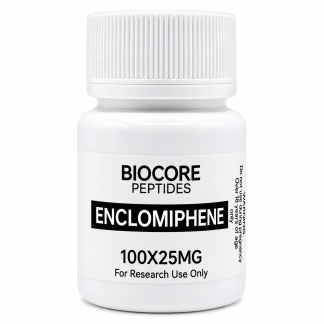
Enclomiphene is a selective estrogen receptor modulator (SERM). It has primarily been studied in men with secondary hypogonadism (low testosterone) because it can stimulate the body to produce more of its own testosterone rather than supplying testosterone externally.
Enclomiphene has been investigated for men whose low testosterone results from inadequate signaling from the hypothalamus and pituitary.
Research suggests it can increase:
- LH (luteinizing hormone)
- FSH (follicle-stimulating hormone)
- The body’s own testosterone production
This differs from testosterone replacement therapy (TRT), which provides testosterone directly and commonly suppresses LH and FSH.
👶 Fertility Preservation
One reason enclomiphene has attracted interest is its potential to increase testosterone while preserving sperm production.
Because it stimulates LH and FSH rather than replacing testosterone, it has been investigated as an option for men with low testosterone who want to maintain fertility. However, individual responses vary, and fertility treatment should be medically supervised.
⚙️ How Does It Work?
Enclomiphene blocks some of estrogen’s negative-feedback signaling at the hypothalamus and pituitary gland. This can cause the pituitary to release more LH and FSH:
↑ LH → testes → ↑ testosterone
↑ FSH → supports sperm production
Enclomiphene is also the trans-isomer of clomiphene (Clomid). Clomiphene contains both enclomiphene and zuclomiphene.
⚠️ Important Considerations
Enclomiphene isn’t appropriate for every cause of low testosterone. If the testes themselves cannot respond adequately to LH/FSH (primary hypogonadism), stimulating the pituitary may not correct the problem.
Potential adverse effects reported with SERMs/enclomiphene can include headache, nausea, mood changes and visual symptoms. Hormone levels and the underlying cause of low testosterone should be evaluated by a healthcare professional.
🧪 Summary
Enclomiphene is primarily being studied for secondary hypogonadism—raising natural testosterone while maintaining LH, FSH and potentially sperm production. This makes its mechanism notably different from conventional TRT.
For Research Use Only

Reviews
There are no reviews yet.