


Description
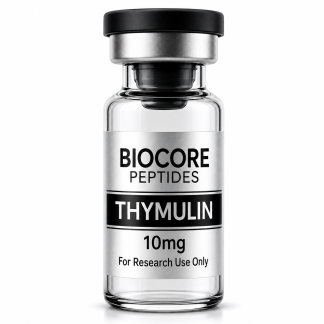
Sold as a lypholized powder
🧬 What Is Thymulin Used For?
Thymulin is a naturally occurring thymic peptide hormone produced by cells of the thymus gland. It plays an important role in immune-system regulation, particularly the development and activity of T cells. Synthetic thymulin is primarily an experimental/research compound, rather than an established treatment for a specific disease.
Research has investigated thymulin for several potential roles:
- Immune regulation: Thymulin helps regulate the maturation and function of T lymphocytes (T cells), which are important for immune defense.
- Thymus and immune aging: Because thymus activity decreases with age, thymulin has been investigated in the context of age-related immune decline.
- Inflammation: Experimental studies suggest thymulin can influence inflammatory signaling and certain cytokines.
- Immune dysfunction: Researchers have examined thymulin and related thymic peptides in conditions involving altered immune responses.
- Neuroendocrine research: Thymulin also appears to interact with the nervous and endocrine systems and has been investigated for potential effects on pain and inflammation.
⚙️ How Does It Work?
Thymulin’s biological activity is closely associated with zinc. The active hormone is generally described as a complex of a nine-amino-acid peptide with a zinc ion.
It can influence T-cell differentiation and immune signaling, helping regulate rather than simply “boost” immune activity.
⚠️ Important Distinction
Thymulin shouldn’t be confused with thymosin alpha-1 (TA1) or thymalin. They’re all associated with the thymus and immune function, but they’re different peptides with different evidence and mechanisms.
Synthetic thymulin is not an approved general-purpose immune treatment, and human clinical evidence for many of the benefits promoted for it remains limited.
🧪 Summary
Thymulin is primarily studied for immune regulation, T-cell function, thymic/immune aging, and inflammatory signaling. Its strongest established role is as a naturally occurring regulator of the immune system; therapeutic use of synthetic thymulin remains investigational.
For Research Use Only

Reviews
There are no reviews yet.