

Description
📌 What is Saline Used for with Peptides?
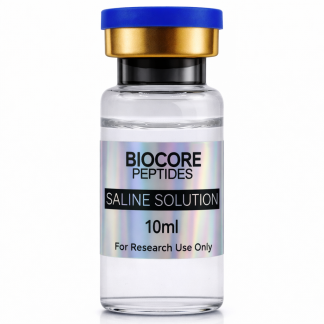
Sterile Saline (0.9% Sodium Chloride) is a neutral, isotonic solution commonly used in research and clinical settings to reconstitute, dilute, or administer peptides. Its salt concentration closely matches that of the human body, making it gentle on tissues and ideal for short-term peptide handling.
💡 Main Uses of Saline with Peptides
| Use | How It Helps |
|---|---|
| 💧 Peptide Reconstitution | Dissolves lyophilized (freeze-dried) peptides into liquid form |
| ⚗️ Dilution | Allows adjustment of peptide concentration for precise dosing |
| 🧪 Short-Term Stability | Suitable for peptides that do not require acidic environments |
| 🦠 Sterile Handling | Maintains sterility during peptide preparation |
| 💉 Administration Medium | Often used immediately before injection in research or clinical protocols |
⚙️ How Saline Works with Peptides
Isotonic solution → gentle on cells and tissues
Maintains neutral pH, which is ideal for many stable peptides
Provides a clean carrier without preservatives or buffering agents
Best used when peptides are used shortly after reconstitution
📌 Peptides Commonly Compatible with Saline
Semaglutide / Tirzepatide / Retatrutide
Cagrilintide
Tesamorelin / Ipamorelin blends
PT-141
Oxytocin
Kisspeptin
(More delicate peptides may require bacteriostatic water or acetic acid instead.)
📈 Benefits at a Glance
✅ Simple and widely available solvent
✅ Gentle and body-compatible
✅ Ideal for immediate or short-term use
✅ Allows precise dilution and handling
✅ No preservatives or additives
⚠ Important Notes
Saline does not contain preservatives, so it is not ideal for long-term peptide storage after reconstitution.
Some peptides are pH-sensitive and may degrade faster in saline compared to acetic acid or bacteriostatic water.
Always use sterile technique.


Reviews
There are no reviews yet.